
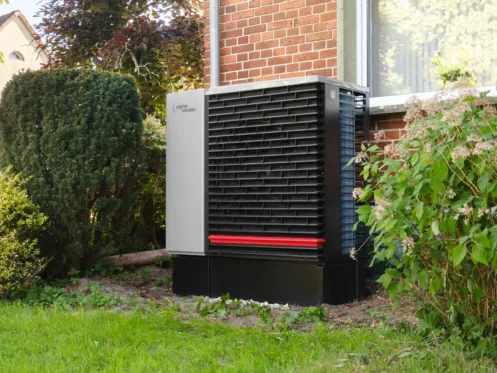
Heat Pump Tax Credits Just Changed: What Homeowners Need to Know Before Upgrading in 2026
Published: SEPTEMBER 11, 2026 | RESIDENTIAL & COMMERCIAL HEATING
If you have been putting off a heat pump upgrade while waiting to see what happens with federal tax incentives, here is the update you need: the landscape changed at the end of 2025, and a lot of homeowners still do not realize it. The good news is that the incentive picture for 2026 is not worse across the board. It is simply different, and understanding what changed is the key to not leaving money on the table.
The Federal Tax Credit Is Gone. Here’s What That Actually Means.
For several years, homeowners installing a qualifying heat pump could claim the Section 25C Energy Efficient Home Improvement Credit, worth up to $2,000 annually toward the cost of a heat pump, heat pump water heater, or similar high-efficiency equipment. That credit officially expired for any equipment placed in service after December 31, 2025, following the passage of the One Big Beautiful Bill Act.
The distinction that trips up a lot of homeowners is the phrase “placed in service.” It is not enough to have purchased or even scheduled your heat pump before the deadline. The system had to be fully installed and operational by December 31, 2025 to qualify for the credit on a 2025 tax return. If your heat pump was purchased in late 2025 but installation was not completed until January 2026, that installation does not qualify. If you completed a qualifying installation before the deadline, you can still claim the credit using IRS Form 5695 on your 2025 return.
For anyone installing a heat pump in 2026, the 25C credit is simply off the table. That is real news, and it is worth knowing before you sit down to budget a project, so you are not planning around a credit that no longer applies.
What’s Still Available: HEAR and HOMES Rebates
Here is what a lot of homeowners miss: the 25C tax credit was never the only federal incentive for heat pumps. Two separate rebate programs, funded through the Inflation Reduction Act, are still active in 2026 and were unaffected by the tax credit’s expiration.
The HEAR program (High-Efficiency Electric Home Rebate) provides a point-of-sale rebate, meaning the discount applies at the time of purchase rather than requiring you to wait for a tax refund. For a qualifying heat pump that handles both heating and cooling, HEAR can provide up to $8,000 off the installation cost. It also covers up to $4,000 toward an electrical panel upgrade if your home’s existing panel cannot support the new equipment, and up to $1,750 for a heat pump water heater.
HEAR is income-qualified. Households at or below 80 percent of their area’s median income receive the full rebate amount. Households between 80 and 150 percent of area median income qualify for a partial rebate. Above that threshold, HEAR is not available, but that does not mean there is nothing left to pursue.
The HOMES program (Home Owner Managing Energy Savings) works differently. Rather than being tied to income, HOMES rebates are based on the measured energy savings your upgrade project actually achieves. Every homeowner is eligible regardless of income. Moderate energy savings can qualify for a rebate up to $4,000, and projects with high measured energy savings can qualify for up to $8,000. Households at or below 80 percent of area median income are eligible for double those amounts.
Both programs are rolling out state by state, so availability and exact dollar amounts depend on where you live. It is worth checking with your state energy office or your utility company directly to confirm what is currently active in your area.
State and Utility Rebates Often Stack on Top
This is the part of the incentive picture that changes the math the most. Many states and individual utility companies offer their own heat pump rebates that can stack on top of HEAR or HOMES, depending on each program’s specific rules. Some states have programs offering several thousand additional dollars, and a handful of states have combined incentive totals reaching well into five figures when everything is stacked correctly.
The amounts vary significantly and change based on program funding, so it is worth verifying current numbers directly with your utility or state energy office rather than relying on a figure you may have seen months ago. Programs get updated, funding pools refresh, and eligibility rules shift throughout the year.
What This Means for Your Decision Timeline
The expiration of the 25C tax credit does not mean the financial case for a heat pump upgrade has weakened. In many parts of the country, homeowners installing in 2026 still have access to more total incentive money than was available through the tax credit alone, once HEAR, HOMES, and state or utility rebates are combined correctly. The difference is that the process now requires a bit more homework, since the incentives are less centralized than a single federal tax form.
This is also where working with an experienced heating contractor pays off beyond just the installation itself. A qualified team should be able to walk you through what rebates are currently active in your area, help you understand which program or combination of programs applies to your specific situation, and make sure your project is structured to qualify for everything you are eligible for.
Talk to Earl’s Heating Before You Assume the Incentives Are Gone
If you have been holding off on a heat pump upgrade because you heard the tax credit expired and assumed that was the end of the story, it is worth a second look. Between HEAR, HOMES, and the state and utility programs that stack on top of them, there is still meaningful incentive money on the table in 2026 for homeowners who know where to look.
Earl’s Heating can help you understand exactly what is available in your area, walk you through the numbers for your specific home, and make sure your next heating upgrade takes full advantage of every program you qualify for. Reach out to schedule a consultation and get a clear, current picture of what a heat pump upgrade would actually cost after available incentives.
Earl’s Heating Is Here for Northwestern Indiana
Earl’s Heating has been serving residential and commercial customers across Lake and Porter County — including Schererville, Merrillville, Crown Point, Valparaiso, Portage, Hobart, Hammond, Gary, Michigan City, Saint John, Munster, Dyer, and surrounding communities — through every kind of weather the region produces.
Following the recent storm activity across northwestern Indiana, our team is ready to help homeowners and businesses assess storm-related HVAC damage, perform post-storm inspections, and get heating and cooling systems back to safe, reliable operation. We offer straightforward pricing, the latest diagnostic technology, and financing options for customers who need repair or replacement work following storm damage.
If your home or business HVAC system was affected by recent storms, contact Earl’s Heating to schedule a post-storm inspection. Do not wait until your system fails — proactive assessment after a significant storm is the fastest path back to comfort and safety for your family or your team.
Call Earl’s Heating today or visit earlsheating.com to schedule your home or business heating inspection.
Frequently Asked Questions About Heat Pump Tax Credits
Q: Is the federal heat pump tax credit really gone for 2026?
A: Yes. The Section 25C Energy Efficient Home Improvement Credit expired for any equipment placed in service after December 31, 2025, following the One Big Beautiful Bill Act. If your heat pump was fully installed and operational by that date, you can still claim the credit on your 2025 tax return using IRS Form 5695. Installations completed in 2026 do not qualify for this specific credit, regardless of when the equipment was purchased.
Q: What is the difference between the HEAR and HOMES rebate programs?
A: HEAR is an income-qualified, point-of-sale rebate, meaning the discount is applied at the time of purchase and is based on your household income relative to your area’s median income. HOMES is a performance-based rebate available to every homeowner regardless of income, with the rebate amount tied to the measured energy savings your project actually achieves. Depending on your income level and the scope of your project, one program may offer a larger rebate than the other, so it is worth having both evaluated before you commit to a project.
Q: Can I combine HEAR or HOMES with state or utility rebates?
A: In many cases, yes. A number of states and individual utility companies offer their own heat pump rebates that can stack on top of HEAR or HOMES, though the specific rules vary by program and location. Some combinations can add up to significant additional savings, while others have restrictions on stacking. Confirming the current rules with your state energy office or utility company before starting your project is the best way to make sure you are not missing an incentive you qualify for.
Q: Do I need to upgrade my electrical panel to install a heat pump?
A: It depends on your home’s existing electrical service and the specific heat pump system you choose. Some homes have sufficient panel capacity already, while others require an upgrade to support the new equipment. If a panel upgrade is needed, the HEAR program can provide up to $4,000 toward that cost as part of a qualifying heat pump installation. A contractor can assess your home’s current panel during an initial consultation and let you know whether an upgrade is part of your project scope.
Q: How do I find out which heat pump rebates are currently active in my area?
A: Program availability and dollar amounts change frequently and are rolled out state by state, so the most reliable approach is to check directly with your state energy office or your local utility company rather than relying on information that may be outdated. A qualified heating contractor who installs heat pumps regularly should also be familiar with the current programs available in your area and can help you understand which ones apply to your specific project.
Earl’s Heating & Air — Northwest Indiana’s Commercial HVAC Specialists. Serving Lake, Porter, LaPorte, and Jasper Counties.